Disillusioned

Not sure if disillusioned is the right word. According to the Apple Dictionary, disillusion means “disappointment resulting from the discovery that something is not as good as one believed”.

I don’t think it’s disappointment I’m feeling. Searching deeper, according to the Apple Thesaurus, disillusion has a similar meaning to “disenchanted, disabused, disappointed, let down, discouraged”.

Discouraged, yes, but that’s only part of it, although, that idea fits. Disabused, absolutely not. Let down? Maybe. Disenchanted sounds promising. The same source as above defines disenchanted as “free (someone) from illusion”. Hmm, getting closer, and the idea of ‘ignorance is bliss’ comes to mind. The origin of the word is basically the reversal of enchantment. Interesting thought. Thinking backwards helps to get closer.

The thesaurus, once again, helps to focus the flavour in my mind, suggesting that “fed up, dissatisfied, discontented; cynical, soured” hold similar meanings as disenchanted. The fed up, dissatisfied, discontented all fit. Cynical, I hope not, and upon inspecting the definition of the word, thankfully not. Soured, no. But that makes me think of people in the job too long, unhappy with the job to long. Soured describes them well.

After all that, still not sure how I feel. Now that the first school year since completing my masters degree is nearing the end, what is this state of mind that I’m in? I don’t recognize it, it’s new. It has settled in, I think, as a result of the masters learning. It creeps in, despite the fact that I still love working with students in the classroom each day, enjoy helping them, teaching them, learning alongside them. I take comfort in that. I do enjoy the kids and the learning.

So why do I feel so apprehensive of this new mindset? And what does it mean for me, my students, my future students, the career I love and feel so ‘right’ in?


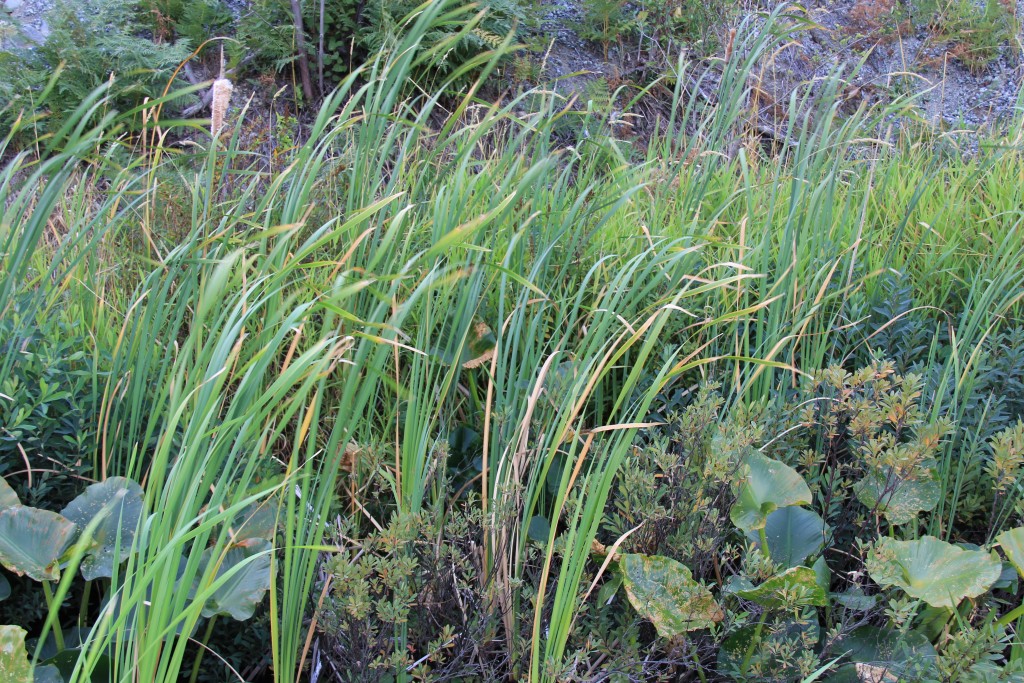
Image by gingisklown and accessed from Flickr.

Impact of the elementary connected classrooms on student engagement

This writing is cross-posted at the Elementary Connected Classrooms Project. It is focused on topics related to our work on the Growing Innovations grant project and my second contribution to our collaborative ECC blog. In less than one month, all the groups involved in Growing Innovations are attending an event showcasing each project. The following post is a response to one of the final questions we are to answer as the project timelines come to a close.
 

How has Connected Classrooms impacted student engagement in the classroom?


Starting with today

I looked through the doorway during a lesson this morning, peeking out to see what the group of students outside was doing. I could see what looked like a huddle of nine boys, all squeezing in around the one student holding the camera. They were watching the playback of a video clip they had just filmed. As I watched, the Aboriginal Student Support Worker supervising students working outside caught my eye. She smiled and said “they’re sure having fun!” As she spoke, the group suddenly broke apart, smiles on every face. They started running toward the classroom, having completed their video clip, ready to upload it to a netbook. Each student looked energized, happy, and motivated. They were fully engaged in their learning.

To put this in context, we started a multimedia unit last week in the Connected Classrooms. Today I introduced software for creating and editing videos. After a 15 minute lesson introducing the learning intentions, software and a quick review of royalty-free audio sites from the week before, I set students free to explore, create and direct their own learning.

That was when the learning started to get messy.

By messy, I mean that some students immediately went over to grab a camera and start filming video clips. One group of students began taking photos for a stop motion animation film. Several students opened up the royalty-free music sites from the week before and started downloading audio. Many students decided to try out the software for themselves and started creating a slideshow right away.

There were students working alone, lost in their own world of multimedia exploration, other students worked with a partner and learned from each other as they went along, and still other students working in small groups. Students were inside, outside, in the back room, out in the hallway and working in the room next door.

I could barely finish up with one student before another came up with an urgent question – How do I upload the video onto my flashdrive? How do I download this song? Where are all the cameras because we need one? – and on and on and on. The students wanted to know, needed to know, the answers so they could get on with creating their multimedia pieces. No hesitation to ask questions from this group.

And that was just the students in my classroom at Cayoosh. Watching the screen from time to time, I could see most of the students in Ashcroft and Lytton at their computers, but I wondered how many of my other students in those places were off with cameras and ideas during the connection. I also wondered if there were any questions from those students afar, but, thankfully, as both of my Connected Classroom colleagues are extremely tech-savvy when it comes to multimedia, I was confident that they were able to answer all questions at their sites.

It was a great class and the learning only stopped because lunch arrived. Students didn’t want to stop. They procrastinated when it came time to finish up – just let me download this one last song, I just need to get the photos off the camera, I want to show my friend the video I made – please Ms G? When I turned the microphone on to finish up the connected lesson with all three sites, I felt as if I was interrupting all the students. The Ashcroft and Lytton students seemed completely engaged as well. The chorus of “Goodbye!” was quieter than usual, and my guess is that students were so into the multimedia activities that our closing farewell faded in importance, a rare and unusual occurrence.

How has connected classrooms impacted student engagement?

Which brings me back to the original question: how has connected classrooms impacted student engagement in my classroom? Even reflecting solely on today’s lesson, there are so many ways to answer this question. There are the obvious answers based on the latest research focused on student engagement in schools. During the connected lesson, students were focused and on task.  They wanted to keep going and didn’t want to stop and disengage from their activities. They took the initiative to ask questions and move beyond the walls of the classroom to get the photos or video footage they needed. They were animated, energetic and brought that ‘edge of chaos’ feeling to the learning environment that seems productive and alive.

Multimedia

Going beyond a quick study of student cues, I would argue that learning in an environment in which multimedia and new technologies are simply embedded into everyday activities is highly engaging for students. Our students have a variety of multimedia equipment available to learn with and from. The students constantly engage with multimedia content; showing them how to create multimedia themselves is of interest to them. They want to learn it. It is relevant to their lives. And in the Connected Classrooms, with resources and people to help, students couldn’t wait to get started on multimedia creations all their own.

Digital teachers

I think that our role as ‘digital teachers’, an idea I developed during my Masters coursework, is also one aspect of the connected classrooms that impacts student engagement overall, and certainly within multimedia unit lessons like the one today. As connected classroom teachers, we create at least one multimedia project per month. The monthly news is created and shared from each site at the end of the month. While students help with this process by recording special events in photographs and video each month, the task of creating and editing the video falls to the teachers. We take this role seriously, showing students responsible, appropriate and safe ways to create and share content online.

Teacher engagement

Another way in which Connected Classrooms impacts student engagement is through teacher engagement. All three of us have choice as to what we teach. I still remember the shock I felt when my administrator asked me what I wanted to teach on my days as the lead teacher. Not surprisingly, we each teach an area that is highly interesting to us. Brooke’s passion for environmental stewardship comes through loud and clear during her Tuesday lessons on current events. Aislinn’s love of children’s literature is obvious not only in her Reading Power lesson activities, but also in her always new and interesting book choices. I love photography and multimedia and I know that my excitement passes along to the students during my Thursday lessons. Our authentic engagement with the topics we teach is obvious; the students get to learn from not one, but three people excited to share about a topic both personally and professionally important to them.

To finish

Student engagement is a tricky topic and the Connected Classroom is an extremely rich and complex learning environment so I’m quite certain I have not in any way adequately answered the Growing Innovation question, but hopefully my thoughts prompted by one lesson have at least made sense and perhaps inspired some new thinking along the way.

Back to an impossible task

I haven’t sat down to write about the ECC since last summer. At that time, I was at the end of my thesis, obsessed with trying to sort and articulate my learning from an indescribably amazing MEd year. One of the struggles I experienced at the time was trying to simplify the Connected Classrooms. At the time I remember thinking that the more I learned about the ECC, the larger it became in my mind and that no amount of thinking or learning or discussing or writing could ever justify, simplify or capture all that the ECC really is because it is such a rich, complicated, wonderful learning and teaching environment.

I’m supposed to be writing a post for the ECC blog, yet, as I sit, all topics I had brainstormed that stare at me from my pages of notes seem to swell, and the familiar outward swirling of this topic seems to appear in my mind. I feel very much still within the final processing stages of learning from my Masters year and I realize that I’ll have to reconcile within my mind to isolate one little snippet to write about today. Now, to grab that one little piece before it gets picked up in the gigantic vortex of thought…

The reason for all of this is the Growing Innovations Grant. Last year, Brooke, an ECC colleague, and Brenna, a Connected 8 teacher, started the grant application process and, long story short, our application was successful and we received the grant. With that came responsibilities, including the creation of, and regular contributions to, an ECC blog. At our most recent ECC collaboration day, we decided that one blog post per month until the spring would be a good way to move forward and make progress towards our project goals listed in the grant application.

Now, while I was excited that we’d be collaboratively blogging about the ECC, I was even more excited when I learned that we could use some of our grant money for release time to actually do the thinking, writing and posting. I love to write, and find writing for professional purposes very valuable, but if you read my blog, you’ll know that, lately anyway, I rarely post. Priorities being what they are, I just don’t have the time to spend writing at my computer a few times a week. Give me a choice between playing Battleship with my child or writing a blog post in that last 30 minutes of free time after dinner is done, dishes are washed and the laundry is on, etc., etc., I’ll choose Battleship every time.

Fortunately, the luxury of time has been afforded to me in small parcels over the next few months. I’m excited to write. But, at the same time, it’s interesting that while I am supposed to be thinking about writing on the ECC, instead I end up on a tangent about the situation of writing itself.

Writing about the ECC again will be both challenging and extremely valuable. It’s a great opportunity to continue the learning that I started in my MEd year of research and, without the extra push of the ECC blog and release time, I probably wouldn’t have the time to do it, not to mention the challenges I still experience trying to wrestle one manageable piece to tame into being my topic.

Enough thinking, I’d best get started…

Listening to technology close the distance

I’m sitting here listening to something amazing. Something that has changed my life and absolutely transformed connections within my family. Something entirely made possible by technology.

I’m sitting here listening to my son and my nephew play a video game together. Little Big Planet 2, to be exact, a fantastic game for kids and grown-ups alike. It’s full of creativity, based on the premise of helping others, and it’s visually stunning to boot. Coolest game ever. If you have kids, work with kids, are a big kid, and you haven’t heard of it or ever seen it, I highly recommend you check it out right away.

So far, there is nothing really remarkable about what I’m saying here. But, the thing is, my son lives with me in British Columbia and his cousin, my nephew, lives halfway across the continent in Manitoba with my brother. The gaming technology allows my son and my brother’s son, who see each other face to face maybe once a year, to play together whenever they want.

I’m listening to my son and my nephew play a video game together online. They are talking strategy and helping each other out as they play. They are, essentially, ‘hanging out’, playing a video game, and building their relationship with each other, all because of online gaming and the amazing technologies that they are fortunate enough to have at hand.

And, to me, especially after my Masters research last year, it’s the effect of the technology on the relationship that is what’s really amazing about what I’m listening to. Technology is enabling my son and my nephew to develop a relationship in a much deeper, relevant and meaningful way than they could ever possibly have otherwise as they are so far apart geographically. Sure, they could talk on the phone, email, video chat, look at the photos emailed back and forth, and they do, but it wasn’t until they started playing that particular video game online together that they really seemed to connect.

They are great friends when they are face to face. The one week or so a year that they see each other is wonderful. They are either the best of friends or they fight like old men who have known each other all their lives. It’s really cute and, for my brother and I, so precious to watch. But it’s also sad that they don’t live closer to each other. It was awful to see the tears and sadness when they have said goodbye in the past.

But I think, the next time they say good-bye, that the tears and sadness will be a little different. First of all, they will have a different, closer bond, next time they meet. I’m interested to see how their relationship is changed due to the shared gaming experience. And, when we go our separate ways, I’m guessing there will be some comment like ‘can you play next Tuesday? I’ll call you when I go online’ to set up the next time they can play. I predict there will be less sadness, more hope, and a stronger connection.

I guess what I’m listening to, then, is technology close the distance and build a bridge of closer connection. That is a worthwhile, transformative use of technology and a valuable way in which online gaming is enriching children’s lives and the bonds within a family. Amazing…


It’s official! I’m a Master!

Shaking the hand of the Dean of Education

Last month my Masters of Education in Educational Practice degree was conferred at Simon Fraser University. My father took some amazing photos, including this photo of me about to shake hands with the Dean of Education, Dr. Kris Magusson. It was an amazing day full of friends, family and colleagues. I had a huge smile on my face all day!

I’m still processing and debriefing, in my mind, all that I learned and all the shifts in my thinking from the MEd last year. It’s absolutely changed the way I teach, the way I think, the way I live my life. I’ve taken a bit of a break from blog posts and professional reading. I continue to tweet, I write in my private journals at home, and I still work too many hours each week, but overall I’m finding time to give my mind a break. There are numerous topics that I want to post on each week but I’m choosing to spend my time with my thoughts and my family instead of spending my time on the computer. I’m thinking that I’ll get back to regular writing in this space soon because I am craving it. I just need a bit more time…

Posted in about me, MEd, Reflection. 6 Comments »

Thinking back on the first month, looking forward to challenges ahead

I’m thinking back today, in order to better think ahead.

The first month of school is already done. It went by in a blur. One of the things I love about teaching is that the days never drag. The classroom is never boring to me. I love the energy, the fast pace, and being in the presence of children and learning every day. That fast pace was certainly evident last month! The year ahead became more clear as well.

I have a challenging assignment this year. I thought last year was tough with a new job, the Connected Classrooms to learn about and my Masters degree to finish. One thing I quickly realized during the first month of school was how challenging this year’s group really is. If I want to teach them all, make sure they each get the individual attention they deserve so that no one falls through the cracks, if I really want to teach them, I’ve got my work cut out for me. I almost feel like last year was a warm up, and I did a good job, so this year the universe has decided to throw a new challenge at me and see how I do with this one.


To be productive, here are the successes of last month and a few things I need to be mindful of as the year progresses.

Positives:

  1. Overall, an active group! Another 2:1 ratio for boys to girls, and they are very active, fit, energetic, athletic kids in general. The top three students in the Terry Fox Run last week were all from my class. Needless to say, there can be no PE or DPA times missed! I think students perform better with an injection of physical activity into the school day. I know it takes time, but it’s time well spent.
  2. Diversity is going to be our overarching theme this year. Without going into details, I have several students who live life with extra challenges each day. I want to somehow turn the diversity of our classroom community into our strength. I plan on highlighting everyone’s strengths and talking about ways to compensate and live with the struggles. I want to emphasize the humanity in each person in the room. I hope to build tolerance, acceptance, understanding and strength. No small feat, but I see it in my mind and feel strongly that it’s the right thing to do.
  3. I have a lot of support. My admin is aware of the challenges this group brings, so my class is a priority for extra support this year. I’ve attended two meetings focused on how best to meet student needs and ensure their success with this class composition. Meetings with parents are upcoming. I have at least one other adult in my room throughout the day, and, during numeracy and literacy blocks, I have two extra people in to help out. I am very grateful for this support and I plan to work with parents and families as much as possible this year.
  4. I’m loving (and the students are too!) the new methods I’m using for teaching math. Thank you Dan Meyer. I watched the TEDx talk of his entitled ‘Math Curriculum Makeover‘ and it crystallized all the concerns I had from teaching math last year. If you haven’t watched it, and you teach math, take the twelve minutes. Absolutely worth it!
  5. I was able to achieve a nice balance in my life during the transition from summer break into the school year start up. I’m going to need energy for the students, but also for my own children at home, and I am aware of the fact that I’m still recuperating from the Masters coursework last year. I’ve been able to establish a nice balance between looking after myself, being a (I hope) good parent, and working hard to be a good teacher.

Things to be mindful of as the year goes along:

  1. Stay positive! I found myself sliding into a state of worry last month. Yes, it’s a challenging group. But I can handle it. I haven’t been able to figure out exactly why I’m sliding into a ‘down’ mindset, but I think part of it is that I miss the enthusiastic, intense infusion of positive energy that I experienced working with my MEd cohort every other weekend last year. I miss those people and the way that they inspired me each week. I get to see them all this Friday (so excited!) and I’m going to have to find a way to keep in touch from afar. Thank goodness for Twitter and email!
  2. Connected to this purposeful striving to maintain a positive mindset is my own professional development. I need to use pro-d in a positive way this year. I have several conferences that I’m looking forward to, partly because of the great learning I expect to experience, but also because of the passionate educators I know I will meet. I need to look for those opportunities to engage with others in an upbeat, uplifting way. Thank goodness for social media and my PLN!
  3. I need to figure out a good system for assessment. I’m thinking of splitting the class into groups and observing/paying extra attention to/talking with/taking notes on one group each day. I usually don’t do my assessments in such a structured way, but with this group, I think I may need to.
  4. I’m still settling and I need time to think. I’ve never liked quiet. I grew up in a noisy household and I used to be the type of person who would turn on the radio and the tv if I was home alone. Not any more. Now, I seek quiet and time to think. I’m guessing that I need this time to let my thoughts continue to settle from all the learning of the last year. It’s as if I need processing time. I’ve only just figured this out in the last week, so now that I now, I’ll be seeking quiet spaces for contemplation and time to let my mind wander, process and settle.
I could keep going, but that seems manageable for now and I’m hoping to revisit this at the end of next month. It’s all part of the purposeful mindset that I seem to have now that the Masters degree is done. It still feels a little unsettling, but the new awareness is worth being pushed beyond my comfort zone. And I’m sure, eventually, at some point, I’ll figure it out. With a little help from my friends, colleagues, students, family, keyboard and pen, no doubt!
Imagery Wither on the Vine by dianecordell from Flickr.com and used under creative commons license (CC BY-NC-ND 2.0)

First Day

The first day is done. It went by like a blur. And, true to my desire to continue to learn from writing as inquiry, I’m taking a few minutes to write out my thoughts and debrief my mind from a very busy day.

It was a great day. As a mother, I was lucky enough to get a hug from both of my children before I let them out the back door of my classroom to go find their line-ups. They are both attending classrooms that are located in the same hallway as me. Last year I worried about separating that teacher/mom identity while teaching at a school my children attend. This year I am enjoying it. It’s still a line I am careful to always respect and honour for everyone’s sake, but it’s lovely to see them more, drive to and from school with them, be more involved in their education, never miss a school performance and make that extra connection with their friends.

As a teacher, I spent the day with 27 people in a blur of activity. I have, at this point, 26 grade five students and one STA for added support. I have yet another class (I had one like this last year too) with a ratio of two boys for every girl and many athletic children in general. Note to self: bring running shoes. I also know there are many who really enjoy art. And their creative, I can see that already.

I made sure that in the short time we had today that there was time for quiet, time to talk, time to write, time to read, time to draw and time to run. I also gave them choices and asked them to tell me what they want to learn this year. I watched and listened and took notes. I’m learning them. I’ll learn them all year.

And what will they learn? Well, certainly more than math, science, art, and other subject areas, which, the longer I teach, the more blurred they become. I’m quite certain they’ll learn how to get along with others, they’ll learn more about the person they are and the person they are becoming and they’ll learn what they’re passionate about in life. They’ll learn that learning can be fun, and quiet, and independent, and noisy, and cooperative, and intense, and playful, and physical. They’ll learn me, and each other, and the STA and the class pet. They’ll learn themselves.

I guess that’s a little bit of a goal statement coming into being. We’ll see how things go…

Posted in Reflection. 2 Comments »

Relaxed and grounded in a state of being uncomfortable

        As I near the end of a summer filled with thoughts of overarching themes in the education system, as I ‘cook’ my thoughts and my learning from the culmination of my graduate coursework, and as I continue to read and engage online with virtual colleagues who constantly motivate and inspire me, I noticed a shift in my mental mindset this week as I planned and prepared for the start of the school year.
        At times I feel relaxed. Maybe it’s because I’m teaching the same grade for the 2nd year in a row. That’s a favourite because I’m finished with the hectic pace of teaching something for the first time (I’ve been a first year teacher five years of my fifteen year career) but while the situation is familiar, it’s also relatively new because it’s only the second year so the inherent excitement of novelty is still attached.
        Other times I feel very grounded. I do feel a certain, new confidence in myself as an educator. The Masters degree allowed me to find a solid theoretical and methodological basis for not only who I am as an educator, but also why I teach the way I do. I am more sure of what’s important to me and my ever-evolving pedagogy. I feel my ‘peeps’ with me, bolstering, offering support, adding to my life’s work.
        And then, at times, I feel unsettled, uncomfortable. As I plan, I notice that I am engaging in the planning process in an entirely new way. After fifteen years of teaching, I’m doing things radically different;  if that’s not transformative learning then I don’t know what is.
        What’s different? I’m faster. I’m able to use social media to ask experts questions and get almost immediate answers. I’m able to find excellent, relevant resources quickly. I know myself better so I’m able to sift through and discard the irrelevant with much more certainty.
        But it’s more than that. I think in a different way. I have a heightened awareness of the different layers of thinking in everything I do whether I’m talking with a colleague or planning a math unit. I have a clearer sense of what I think to be important and I am aware that the kids needs are much more in my mind as I go.
        It’s exciting and a little unsettling at the same time. I am excited about the start of the year. I can’t wait to see the students next week. I know my passion to work with children and help them along in life is an strong as ever. The tricky part is, as I wrote in an earlier post, that after my MEd learning I need to learn how to walk differently as I move through my classroom, my school, my home, my community. That’s the part I’m still adjusting to. And it’s uncomfortable. But that’s okay. That uncomfortable feeling only means I’m still learning and that is a state of being uncomfortable that I’m pretty sure I can handle.

Imagery: iEllen by boeke from Flickr.com

Learning to walk as a master

Last month I completed my Masters in Education in Educational Practice from Simon Fraser  University. This was a graduate field program, meaning that it was designed for working  teachers to complete while continuing to work full time. It involved teacher inquiry into our  practice using qualitative research methods. It was easily the most transformative learning  experience of my life and I feel as if I’m walking through the world differently these days.

What did I learn? I’ve been cooking my thoughts, as Dr. Kelly, our prof, would say, to try to  make sense of the year’s learning. It took me ten days to relax and come down from the  intensity of the thesis submission and final comprehensive presentation. Once I relaxed, I  realized how exhausted I am, both physically and mentally. Aside from the sleep deprivation,  which I can remedy by returning to a normal bedtime, it’s a good exhaustion. It’s similiar to the wonderful feeling I enjoy after a long run when my body feels physically worked and tired, but the better for it. And what was it, exactly, that exhausted my mind? What’s actually still cooking in my thoughts?

I have moments of insight. Moments where there is pure clarity as to what I learned and how the MEd experience changed me. And then there are days of feeling lost and scattered and confused about how to synthesize and articulate even one piece of my learning. Is it even possible to communicate one entire year of intense study? Some days I think I need to just wait and, with time, clarity will arrive. Other days I think that to condense all that learning into so few words is impossible and unrealistic and will never happen, regardless of how much time passes.

I decided on a few profound learnings that I can, with certainty, share at this point:

1. I learned to attend, to be wide awake (see Maxine Greene). Not what I expected at all. I expected to learn ‘something’, not a way of being in the world. I hope to share this with others.

2. I learned that, in my humble opinion, to be literate in Canada today, to be literate in the world today, must include the ability to read and communicate with, and through, images. It’s not enough anymore to simply see literacy as reading and writing; overall literacy must include visuals as one of the forms of communication. I finally achieved an understanding of what this ‘visual literacy’ means and learned the beginnings of how to include it into my practice. See works by Elliot Eisner and David Jakes.

3. I learned that my own notion of citizenship has a local, national, global and digital component. Creating global citizens is a popular topic in education these days, especially in the blogosphere, but to me, that’s only one piece. It’s not sensible to have empathy for those in dire situations on the other side of the planet and yet turn a blind eye on those in dire need in your own community. And the complicated beast that became (digital) citizenship in my thesis is a topic I have yet to tame, although I enjoy the constant and challenging attempt to do so and I now, more than ever before, absolutely see this as a vital component to everyone’s education, not just, but especially, children’s.

4. I learned that deep caring for children, all children, sits as the base of my pedagogy. It always has, but I wasn’t aware of how and why until I wrote my thesis. Motherhood is a part of the deep caring, but not all of it. I care deeply for the well-being, the happiness and the future of all children, mine first, of course, but all other’s children a close second. The theme of care, always present before, but now with the added weight of notions like making decisions based on the 7th generation to come and scholars such as Nel Noddings to bolster and add support, is even more prevalent in who I am as an educator.

5. Finally, thankfully, I learned that I found a place of contentment. This is, of course, more of a mental state than a physical place. I often struggle to be content in life. I have high expectations for myself and those around me. I detest boredom and usually create a constant, positive push to improve and move forward in my life. With the ending of the Masters year, however, I realized I need to stop pushing for awhile and just be. And, thankfully, I’m content with that.

And so, all this learning has left quite an impact on me personally and professionally. I will walk through the world in a different way, truly transformed by the learning experiences of this past year. I know that next month, I will walk into my school and my classroom differently. I’ll walk into that classroom determined to advocate for the arts, an approach, a method that children love and that is important for their education. I’ll walk into that classroom knowing that the reality of shared experience extends beyond the classrooms walls and into an intangible environment entered into through technology and that extension is changing, has already changed how we learn, engage with one another, and live our lives. I’ll walk into that classroom sensitive not only to the influence that my family’s complicated heritage has offered, now offers, to my practice, but also keenly aware that each of my students also bring known and unknown family history to their learning and our classroom environment. Finally, I know that I will walk differently as a mother with a new perspective on how to raise my children.

More to come…


Imagery: Waking creativity by jenn.davis and Jurassic Park by mallitch, both from Flickr.com and used under Creative Commons licensing.


Leadership Day 2011 – Risk, Trust, & Relationships

Today is Leadership Day 2011. Every year on this day, the creator of Leadership Day, Scott McLeod, invites bloggers to post on a topic related to leadership. This year, he narrowed it to effective school technology leadership. I’ve participated in Leadership Day before and at this time, this topic seems even more present in my life. Last week I completed my Masters of Education and one strand of my research focused on technology in the field of education. For the past eleven months, I immersed myself in learning about this topic and, as a result, I’m even more passionate about integrating new technologies into my practice, my classroom, my school, my district.

When I think about effective school technology leadership, I think about how best to encourage educators to bring new technologies into their practice. Here are my thoughts on how to do this and they aren’t related to the technology at all, but rather to the people involved:

  1. Risk – The first thing that comes to mind is risk taking. For most adults using new technologies, it’s often necessary to extend well beyond one’s comfort zone. Learning can be messy and uncomfortable. Mistakes are often made. Profound learning often involves an element of risk if gains are to be made.
  2. Comfort and Safety – In order to feel comfortable taking a risk, a person has to feel safe, supported. I learned this as an art teacher. The few students who were unsuccessful in my art classes were those, for whatever reason, unable to risk doing something they couldn’t do or had never done before. Strong support and an environment perceived to be safe and secure is vital in situations in which learning is risky.
  3. Vulnerability – Once a safe learning environment (or school atmosphere) is in place, most can be encouraged to be vulnerable and step outside of the comfort zone. Vulnerability is a tricky thing. It’s raw and within a realm of human experience that many don’t feel comfortable being in. Some don’t need much coaxing, some do – every learner is different regardless of whether they are a grade five student learning how to upload photos from a digital camera or an educator striving to learn how to use Twitter for professional development. If you haven’t seen it yet, Brene Brown’s talk the Power of Vulnerability is well worth the twenty minutes.
  4. Trust – In my opinion, trust is essential to enabling people to be vulnerable enough to risk learning something new and intimidating (I don’t know about you, but technology can be pretty intimidating at times). If someone trusts you, they are more willing to listen and take into consideration your opinions, beliefs, vision. Trust is earned. It’s tentative at times. It needs to be maintained. Which brings me to…
  5. Relationships – It always comes back to relationships, with ‘it’ being just about anything in education. Out of 19 thesis presentations last week in my MEd cohort, most included the theme of relationships as a central part of the learning that occurred. The best way to create trust is to establish and build a solid relationship with someone. That relationship will shift depending on the people involved, but making the effort to show care for, and consideration of, another human being goes a long way in creating and maintaining relationships that can enable powerful learning to take place.
  6. Modeling – My last point for today is that it’s important for the leaders in this situation to model all the points mentioned above. A great example of someone who embodies this is an administrator I’ve recently ‘met’ through Twitter. Tia Henriksen recently burst onto the social media scene and she is a great example of a person role modeling her learning about and increasing understanding of how to integrate technology into the field of education. I was delighted, and not at all surprised, to find a Leadership Day post on her blog today too.
Finally, outside of my list above, but still central in my thoughts, when I think about effective school technology leadership, I think, as I often do, about the students. I think about kids and their use of technology in and out of the classroom. They (usually) aren’t intimidated by new technology. When technology doesn’t work, they just figure out the problem or ask for help. Yes, they get frustrated, I’ve seen it many times in my classroom full of the latest technology, but that just seems to be an accepted part of working with technology. Even though they have never lived in a world without computers or the internet (like many of us who will be writing these posts for Leadership Day!), I think that we should remember to always learn from them too.